Meme coin trading can turn a small bankroll into six figures if you treat it as a system rather than a lottery ticket
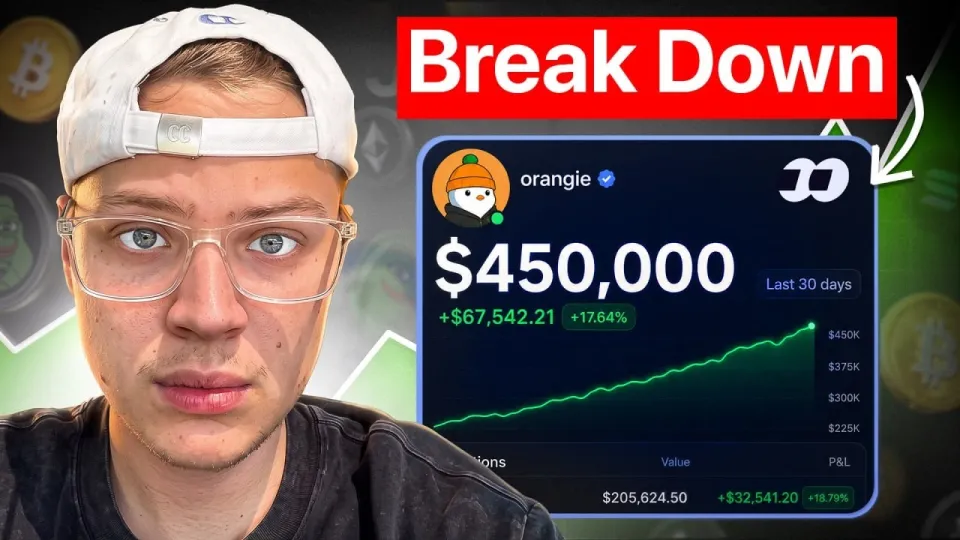
Video: How I Made $450,000 Trading Memecoins in 30 Days
Want articles like this for your own video to promote it on YouTube and Google? Order them through the Telegram bot @sat_sit_bot. The bot writes and publishes the articles itself (with your YouTube video embedded) on popular topical websites (no ads). Free trial — 50 articles.
· based on the channel Orangie Web3
Key takeaways
- Orangie Web3's breakdown reports $450,000 in profit from memecoin trading over a 30-day window, with the caveat that such results are outliers, not a baseline.
- Most memecoin volume in 2026 runs on Solana, where tokens launch on venues like Pump.fun and graduate to Raydium or Orca pools.
- The core skill is not picking one 1000x coin but surviving a high-loss-rate game: expect the majority of positions to go to zero.
- Position sizing and pre-set exit rules matter more than narrative research, because memecoins can drop 80-90% within minutes of a top.
- Community access and faster execution tools shorten reaction time, but they also increase the risk of buying tops during coordinated callouts.
A meme coin is a cryptocurrency whose value is driven almost entirely by community attention, internet culture and short-term speculation rather than by revenue, cash flow or a product roadmap. Trading them profitably is less about finding the next Doge and more about surviving a game where most tokens go to zero while a handful of winners pay for everything else. Orangie Web3's breakdown of a reported $450,000 run over 30 days is a useful case study in how that asymmetry is actually played — and how much of it depends on process rather than luck. If you want to follow the same workflow and tools the channel uses, the entry point is the Kaizen Group membership and checkout page.
What a meme coin actually is and why it moves so fast
A meme coin has no intrinsic valuation model, so price is set purely by supply, liquidity and the flow of new buyers. That single fact explains almost every behaviour you see: a token can go from a $30,000 market cap to $3 million in an hour because the pool is tiny and a few hundred buyers are enough to move it, and it can collapse 90% just as fast when those buyers stop arriving.
The mechanics matter. On Solana, most new tokens are minted through launchpads such as Pump.fun, which use a bonding curve to price the token until it reaches a threshold and "graduates" to a full liquidity pool on a decentralized exchange like Raydium. Graduation is the first real filter: before it, you are trading against a curve with no external liquidity; after it, real market makers and larger wallets can enter. Everything about risk changes at that line.
Three structural features drive the speed of the niche:
- Low float and thin liquidity. A few thousand dollars of buys can double a small-cap token, and the same amount of selling can halve it.
- Zero barriers to creation. Anyone can launch a token in minutes, which means the supply of new coins is effectively infinite and attention is the only scarce resource.
- Narrative velocity. A meme spreads through group chats and short-form video in hours, so the entire lifecycle of a trade can be shorter than a single workday.
The math behind a six-figure memecoin run
Large reported profits in this niche come from a hit rate that looks terrible on paper but works because of asymmetric payoffs. If nine out of ten positions return nothing and the tenth returns 30x, a portfolio built on equal small bets is still deeply profitable. The trap is that most traders size the losers too large and the winners too small — the exact inverse of what the math requires.
Consider a simplified model. With $10,000 split into twenty $500 positions, losing fifteen of them costs $7,500. One position returning 20x turns $500 into $10,000, which already covers every loss; a second winner at 10x turns the whole exercise into a six-figure outcome. This is why experienced traders talk about "one hit" carrying a month. It is also why the reported $450,000 figure should be read as an outlier produced by a small number of very large winners, not as a repeatable monthly salary.
The uncomfortable corollary: the same math destroys accounts that use leverage-like sizing, chase tokens after a 10x candle, or average down into a dead chart. The distribution of memecoin outcomes is brutally skewed, and the only way to stay in the game long enough to catch a winner is to cap the damage from the losers.
A practical workflow for trading meme coins on Solana
A repeatable process beats a hot tip, because the same checklist applied to hundreds of launches is what produces a track record. The workflow below is the one that separates a trading routine from gambling.
- Set up a dedicated wallet. Use a fresh Solana wallet funded only with capital you can afford to lose entirely. Never connect a wallet holding long-term assets to launchpad sites or unknown token contracts.
- Screen the contract before the chart. Check mint authority (should be revoked), freeze authority (should be disabled), top-holder concentration and whether liquidity is locked or burned. A single wallet holding 20%+ of supply is an exit-liquidity risk regardless of how good the meme looks.
- Read the chart and the pool, not the replies. Look at holder count growth, unique buyers, and whether volume is organic or a handful of wallets cycling the same tokens. On graduated coins, check the depth of the Raydium or Orca pool — thin pools mean your own sell will move the price against you.
- Size every position before entry. A common rule is 1-3% of the trading bankroll per position, so a run of ten losses is survivable. Decide the size first and never increase it because a chart looks strong.
- Define the exit in advance. Set a partial-sell plan — for example, sell the initial capital back at 2x, take a third off at 5x, and trail the remainder. Memecoins rarely give a second chance at the top.
- Log the trade. Record entry, exit, thesis and outcome. After fifty trades the log will show which setups actually pay and which narratives you keep overpaying for.
Risk control rules that keep a memecoin account alive
Risk management is the entire edge in a market where the average token is designed to go to zero. The traders who survive multiple cycles tend to follow a small set of hard rules rather than rely on intuition.
- Cap total exposure. Keep the speculative sleeve separate from savings, and never top up a losing trading wallet from other funds in the same week.
- Assume rug risk on every launch. Liquidity pulls, honeypot contracts and hidden mint functions are routine; a contract check takes thirty seconds and prevents the majority of total losses.
- Do not chase green candles. Buying after a 300% move in five minutes means buying the exit liquidity of earlier buyers.
- Watch for coordinated callouts. Large group chats and paid signals can move a token sharply, but members often buy before the call reaches you. Treat a pump in a private group as a distribution event until proven otherwise.
- Take profits in stablecoins. Unrealized gains in a memecoin are just a number on a screen; converting to USDC or SOL locks the result in.
Common questions and misconceptions from newer traders
The most frequent doubts from people starting out are about speed, capital and whether the whole thing is rigged. All three deserve direct answers.
"Is it too late to start with a tiny bankroll?" No, but the expectations must change. A $100 account cannot produce a six-figure month; what it can do is let you test the process with real money and real emotions. Many traders lose most of a first small deposit and only become consistent after treating that loss as tuition.
"Do I need to understand everything before the first trade?" Not everything, but you do need the contract checks and the exit plan. Explanations that move fast are fine for experienced viewers and confusing for beginners; the fix is to pause, replay and write the checklist down rather than to trade live while learning.
"Are the big wins real or just group coordination?" Both things exist. Access to fast information and a network of active traders genuinely shortens reaction time, but that advantage cuts both ways: the same groups that call a coin early also exit into their own members' bids. Transparency about entries and exits matters more than the size of a reported profit.
"What separates a trader from a gambler here?" A written plan, fixed position sizes, logged trades and a willingness to sell. Someone who can lose 90% of a small deposit, review why, and then hit a 3x on a better-sized position is running a process; someone who keeps adding funds to a falling chart is not.
Useful links
- Kaizen Group membership and checkout — the community and trading setup referenced by the channel.
- FOMO trading platform — the execution interface used for fast memecoin entries.
- Orangie Discord — discussion, calls and trade breakdowns.
- Orangie on Instagram — short-form updates and clips.
Final takeaway
Meme coin trading is a probability business, not a prediction business: the reported $450,000 month is the visible tail of a distribution in which most trades lose money and a few pay for everything. What transfers from that experience is the discipline — a dedicated wallet, contract checks, 1-3% position sizing, pre-planned exits and profits moved into stablecoins. What does not transfer is the outcome itself, which depends on timing, liquidity and a large dose of luck. The Orangie Web3 channel is worth following for trade breakdowns and entry-and-exit reasoning, but treat every headline number as a case study rather than a target. If you want the same toolkit and community the channel uses, start with the Kaizen Group checkout page and size your first positions as if every one of them could go to zero.
Questions & answers
How much capital do you need to start trading meme coins?
You can start with a very small amount, but the size of the bankroll determines what is realistic. A few hundred dollars is enough to learn the mechanics, run contract checks and practice exits, while six-figure outcomes require both a larger base and a small number of outsized winners. Never fund a trading wallet with money you cannot afford to lose completely.
Why do most meme coin traders lose money even when they pick good tokens?
Because position sizing and exits usually fail before the thesis does. Traders often buy after a large move, size losers larger than winners, and hold through an 80% drawdown hoping for a recovery. With a high loss rate built into the niche, one oversized mistake can erase the gains from several correct calls.
Is joining a paid trading group or signals chat worth it?
It can shorten the learning curve by showing real entries, exits and reasoning, but it is not a guarantee of profit. Coordinated callouts can move a token quickly, and members may be buying after earlier participants. Judge a group by whether it explains why a trade was taken and how it was exited, not by screenshots of wins.
What should you check on a Solana token before buying?
Verify that mint and freeze authority are revoked, that no single wallet holds a large share of supply, and that liquidity is locked or burned. Then look at holder growth, unique buyers and pool depth on the exchange where the token trades. Skipping these checks is the most common cause of total losses from rugs and honeypots.
Source: How I Made $450,000 Trading Memecoins in 30 Days · Markdown version